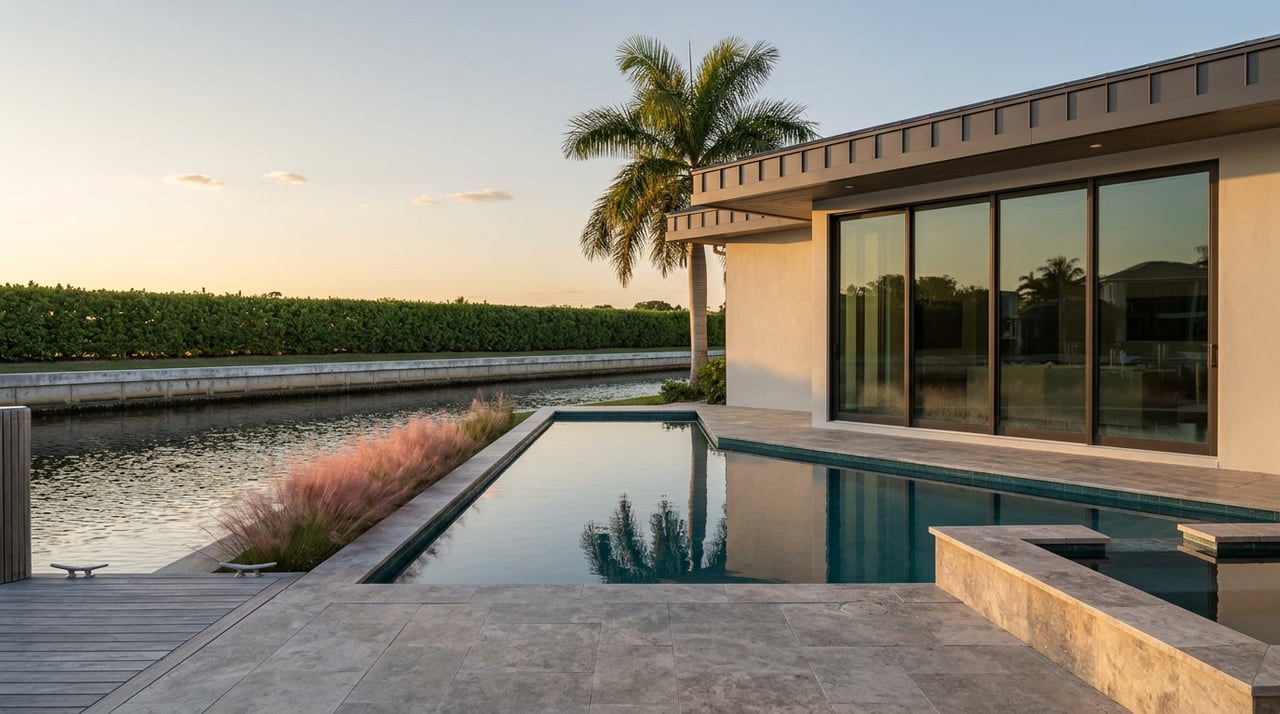
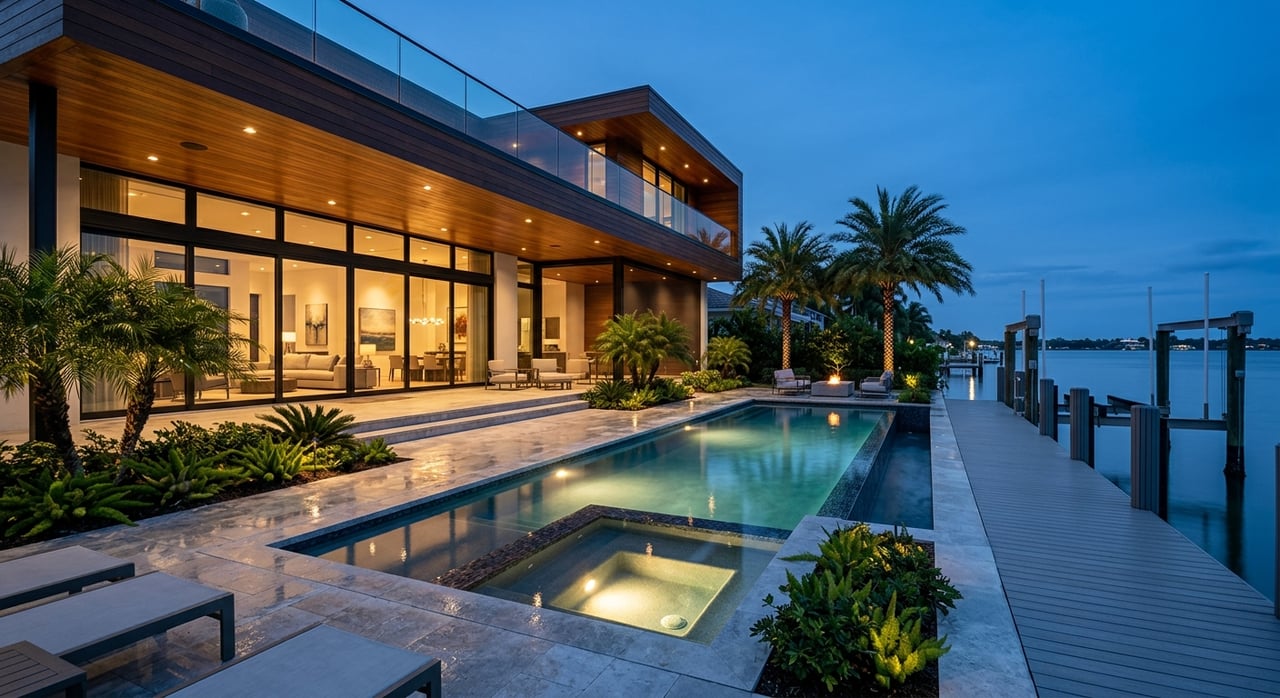
If you live on the canals of Aqualane Shores or you are buying here soon, your dock is as essential as your kitchen. You want effortless Gulf access, a quiet place to launch, and a lift that protects your investment. In this guide, you will learn how to plan vessel size and turning space, choose a lift and materials, integrate lighting and landscape, and navigate Naples-area permits with confidence. Let’s dive in.
Clarify your goals first
Before you sketch a layout, decide how you will use the dock. Are you storing a center-console, sportfisher, express cruiser, or multiple small craft like wave runners and a dinghy? Will you launch daily, host guests overnight, or moor occasionally while keeping the main vessel on a lift? If resale matters, know that buyers here value maximum usable boat length, reliable depth at the dock, and a lift sized to their boating plans.
Size the berth and approach
A comfortable berth makes day-to-day boating easier. Plan usable berth length to be at least 10 to 20 percent longer than your boat’s length overall to allow fenders and safe boarding. Keep walkways a minimum of 3 to 4 feet for single-sided access and 5 to 6 feet where people circulate or you plan furniture. Check vertical clearance for lifts, antennas, and any overhead utilities so you are not boxed in later.
Canal maneuvering in Aqualane Shores can be tight. As a rule of thumb, allow a turning circle of about 2 to 3 times your vessel length where possible. If you intend to turn a larger boat in a private basin, consult a marine architect or a local marina operator for a vessel-specific turning study.
Choose the right boat lift
Select lift capacity that exceeds your boat’s fully equipped weight, including fuel, water, engines, and gear. Typical residential ranges include:
- Personal watercraft: 1,000 to 2,500 lb
- Small to mid-size boats, about 20 to 30 feet: 6,000 to 12,000 lb
- Larger sportfisher or cruisers, about 30 to 45 feet: 15,000 to 40,000+ lb
- Yachts over 45 feet: purpose-built lifts or hoists, 40,000 to 100,000+ lb
Choose a lift rated for saltwater and hurricane exposure with stainless or galvanized hardware. Size shore power correctly for lift motors and accessories, use GFCI-protected circuits, and consider redundancy plus a manual override for emergency lowering. If you may upsize boats later, plan pile spacing and foundation capacity now so you can upgrade without rebuilding.
Build with coastal-grade materials
Framing and piles set the tone for longevity. Pressure-treated timber piles are common, while steel or composite piles raise durability in high-end builds. Aluminum framing is light and corrosion-resistant for finger piers and gangways; verify load and deflection for busy docks. Use marine-grade fasteners, with hot-dipped galvanized hardware where buried and 316 stainless where exposed to saltwater.
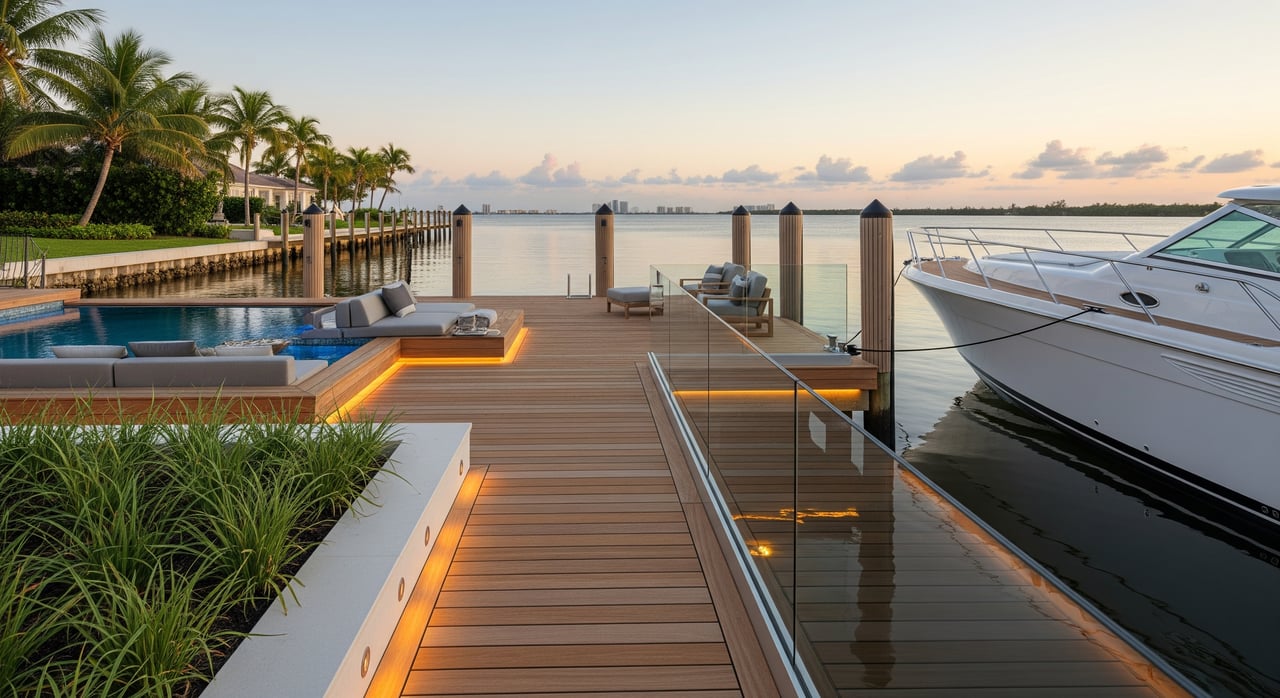
Decking defines both look and upkeep. Tropical hardwoods such as ipe are durable and refined but need periodic maintenance. Composites and PVC or capped composites offer low maintenance and fade resistance; choose marine-grade, non-slip profiles and note that some surfaces run hot in full sun. Plan pile protection with shoes, collars, or sleeves, and specify UV- and salt-resistant finishes. Expect about 10 to 20 years for pressure-treated decking with maintenance, 15 to 30 years for hardwoods, and 15 to 25 years or more for quality composites, depending on manufacturer warranties and care.
Design for storms and tides
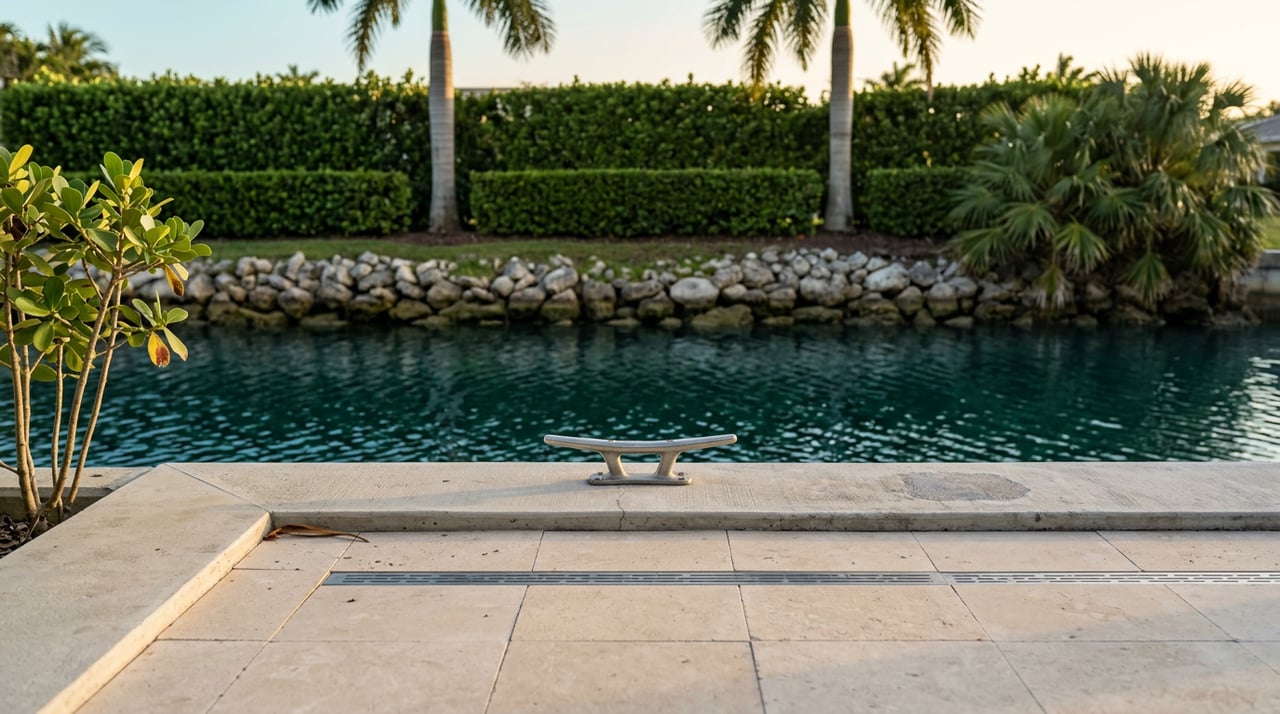
Aqualane Shores connects to Naples Bay and the Gulf, so storm readiness matters. Engineer piles and bracing for local wind, wave, and surge conditions, and include reinforced cleats and a clear storm-securing plan. Review your property’s Base Flood Elevation on the FEMA flood maps and confirm local code requirements for fixed equipment. Removable rails, non-slip surfaces, ladders, and life rings improve safety without sacrificing aesthetics.
Respect Aqualane Shores ecology
Protecting the environment is good stewardship and good permitting strategy. Pre-construction surveys help avoid seagrass beds and sensitive benthic areas, and turbidity controls limit sediment during pile work. Mangrove trimming or removal is tightly regulated across Florida and alternatives are preferred. For lighting near beaches, follow sea turtle best practices and local codes, and use the Florida Fish and Wildlife Conservation Commission guidance on turtle-friendly lighting.
Light the dock with intention
Great lighting balances safety, mood, and wildlife protection. Choose shielded, downward-directed LED fixtures with warm or amber tones where appropriate, and use timers, dimmers, and motion controls to minimize glare. Path and step lights should be low-voltage and discreet to preserve night skies and neighbor privacy. Under-dock blue or green LEDs can be striking for evening fishing, but confirm local guidance and any applicable rules.
Landscape and shoreline integration
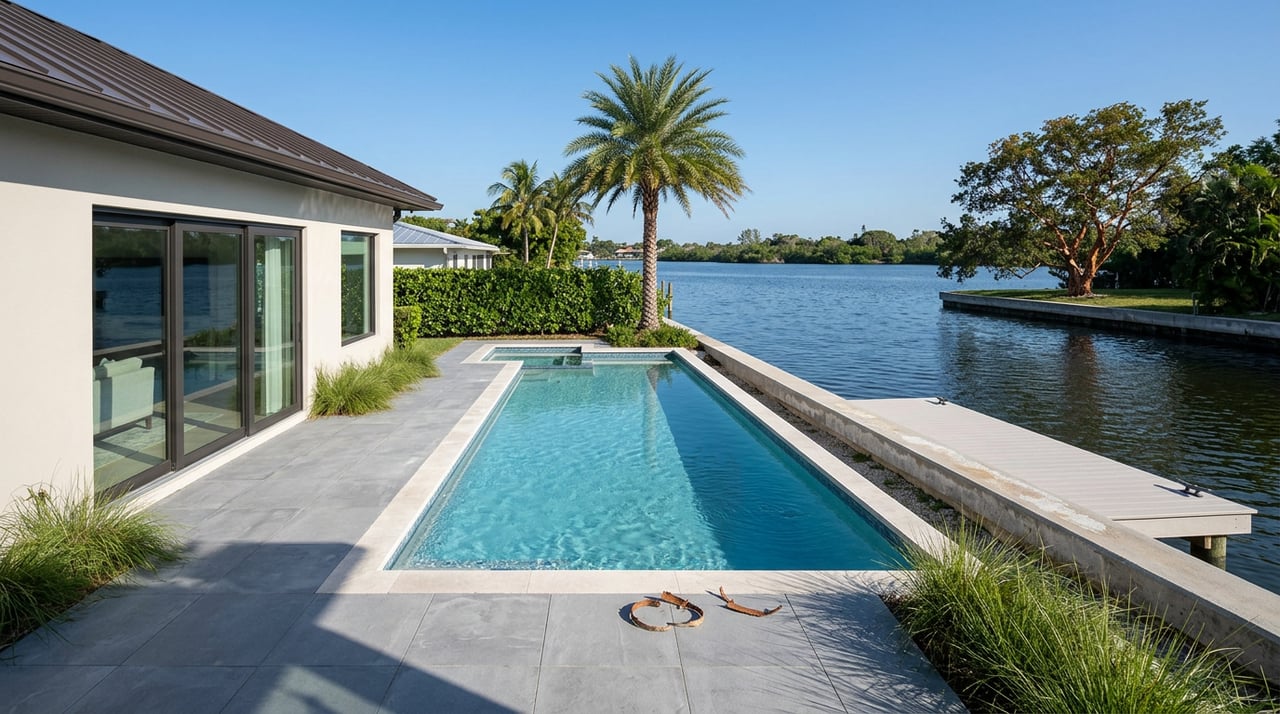
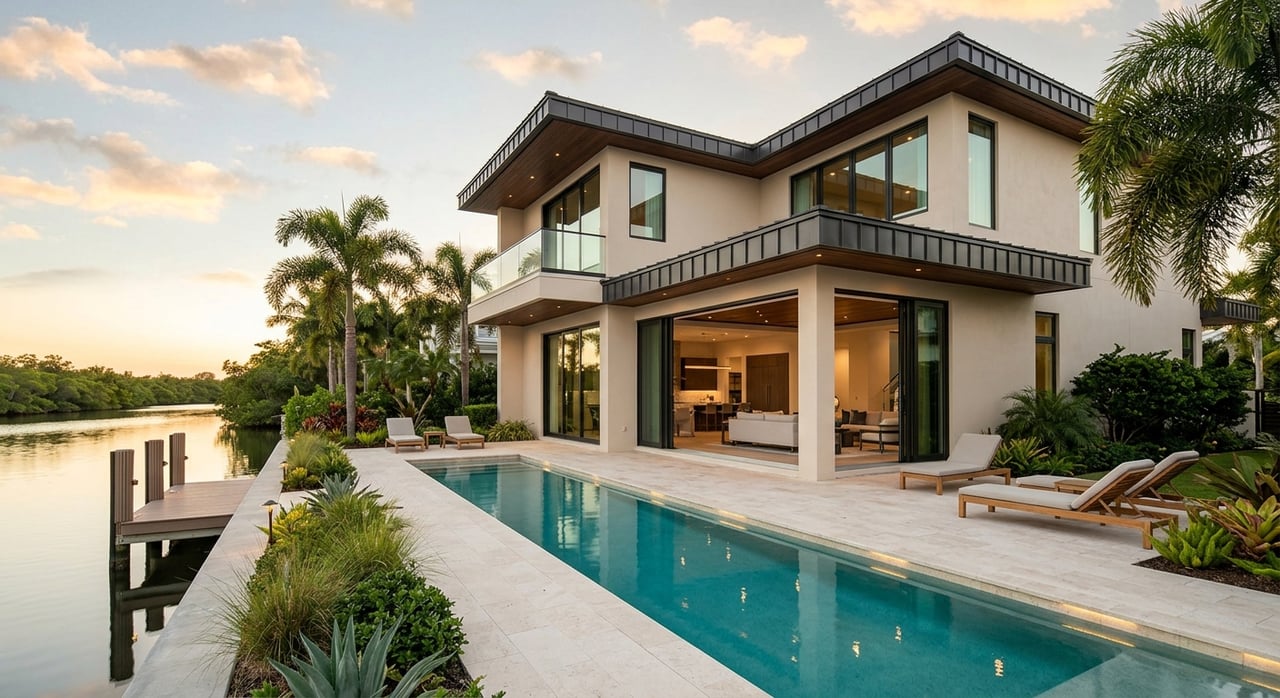
Tie your dock into the backyard with native, salt-tolerant plants and consistent hardscape finishes. Preserve mangroves and natural shoreline where present for erosion control and habitat benefits. Where feasible, consider living shoreline strategies that combine coir logs with native plantings, subject to approval. For plant selection and shoreline ideas, start with the University of Florida’s Florida-Friendly Landscaping resources.
Confirm depth, tides, and access
Naples has a modest tidal range, but actual depth at your dock depends on dredging history and siltation. Before finalizing lift size or the dock’s reach into the canal, obtain a hydrographic survey with soundings that reference mean lower low water. If you need deeper water, an extension or dredging may be required, which adds permitting steps. For planning context, consult NOAA nautical charts and tidal information.
Permitting in Naples, step by step
Waterfront work touches several agencies, so build your timeline accordingly.
- City of Naples: Building permits for dock construction, electrical, and accessories, plus rules on setbacks and canal encroachments. Start with the City of Naples Building and Planning.
- Collier County: If your project touches county jurisdiction, coordinate with Collier County Growth Management and Environmental Services.
- State and federal: The Florida Department of Environmental Protection handles Sovereign Submerged Lands and environmental resource permits, and the U.S. Army Corps of Engineers Jacksonville District oversees work in navigable waters. Many residential docks qualify for general permits, but verification is required.
Typical sequence:
- Hold a pre-application meeting with City of Naples staff, and include Collier County if relevant.
- Complete boundary and site surveys, plus a marine hydrographic sounding.
- Engage a marine structural engineer to prepare plans and calculations.
- Submit local building permits and coordinate state and federal authorizations.
- Plan construction around sensitive marine life periods and mobilize once permits are issued.
- Schedule inspections and keep all approvals and as-built documents for future resale.
Permitting can take weeks for simple repairs or several months for new docks with dredging or vegetation impacts that need environmental review.
Assemble the right team
High-quality execution depends on specialized expertise. Involve a licensed marine contractor with Naples experience, a marine or coastal engineer, and a surveyor for bathymetric soundings. Add a licensed marine electrician for shore power, a lift vendor for sizing and service planning, and an environmental consultant if seagrass or mangroves are present. A permitting expediter can streamline multi-agency coordination.
Construction best practices
Ask your team to use turbidity curtains and best management practices to control sediment during in-water work. Ensure proper pile-driving techniques for local soils and consider acoustic impacts. Specify marine-grade cable, weatherproof breakers, and GFCI protection, and plan accessible metering and disconnects for inspections. Document a storm plan that covers securing vessels and lifts before named storms.
Value and resale in Aqualane Shores
Buyers here prioritize direct Gulf access, a lift that fits their boating lifestyle, and clean, low-maintenance finishes. Clear documentation adds confidence. Keep engineered plans, permits, inspections, maintenance logs, and lift and decking warranties. Provide recent depth soundings and any dredging history, and highlight thoughtful environmental choices such as turtle-friendly lighting and mangrove preservation.
Project timeline and tips
- Start early. Surveys, engineering, and permits can set the pace.
- Plan for your next boat. Pile spacing and foundations that accept a larger lift protect future flexibility.
- Keep safety front and center. Non-slip surfaces, handrails, ladders, and lighting matter at night and during weather.
- Maintain regularly. Rinse, inspect hardware, and refresh finishes on schedule to extend life and preserve appearance.
A beautifully engineered dock in Aqualane Shores is part of how you live and part of your property’s story. If you are buying or preparing to sell, align design decisions with lifestyle and resale from day one. For perspective on what today’s buyers prioritize along these canals, connect with Karen Van Arsdale for a private conversation tailored to your goals.
FAQs
What boat length works for Aqualane Shores canals?
- Plan usable berth length at least 10 to 20 percent over your boat’s length overall and target a turning circle about 2 to 3 times the vessel length, verified by a site-specific hydrographic survey.
How long does dock permitting take in Naples?
- Simple repairs can be a few weeks, while new docks that involve dredging or environmental review may take several months due to City, state, and federal coordination.
Which dock materials last in Naples saltwater?
- Tropical hardwoods and composites are durable, with hardwoods often lasting 15 to 30 years with maintenance and composites 15 to 25 years or more, while steel or composite piles can enhance longevity.
How should I size a boat lift for my vessel?
- Choose capacity above fully equipped weight; examples range from 6,000 to 12,000 lb for many 20 to 30 foot boats and 15,000 to 40,000+ lb for 30 to 45 foot sportfishers or cruisers.
What lighting is turtle friendly near Naples beaches?
- Use shielded, downward-directed fixtures in warm or amber tones with timers and dimmers, following local rules and the Florida Fish and Wildlife Commission’s guidance on turtle-friendly lighting.
Do I need surveys and engineering for my dock?
- Yes, boundary and hydrographic surveys define property lines and depth, and a marine structural engineer ensures piles and framing meet local wind, wave, and load requirements.