Shopping for a gulf-front condo in Moorings or a bayfront residence in Park Shore and wondering how jumbo financing works? You are not alone. Many Naples luxury purchases exceed standard loan limits, which changes how lenders review your file and your property. In this guide, you will learn the essentials of jumbo loans, how coastal condos are reviewed, and what to prepare so you can move confidently. Let’s dive in.
What is a jumbo loan in Collier County
A jumbo loan is any mortgage that exceeds the conforming loan limit set by the Federal Housing Finance Agency. Conforming loans can be purchased by Fannie Mae or Freddie Mac, while jumbo loans cannot and are priced and underwritten by lenders and private investors.
Conforming limits are updated each year and for most counties sit in the mid 700 thousand range for single-family homes. In Collier County, many Moorings and Park Shore properties exceed those limits. When your loan amount rises above the applicable limit, it is considered jumbo and subject to non-agency guidelines.
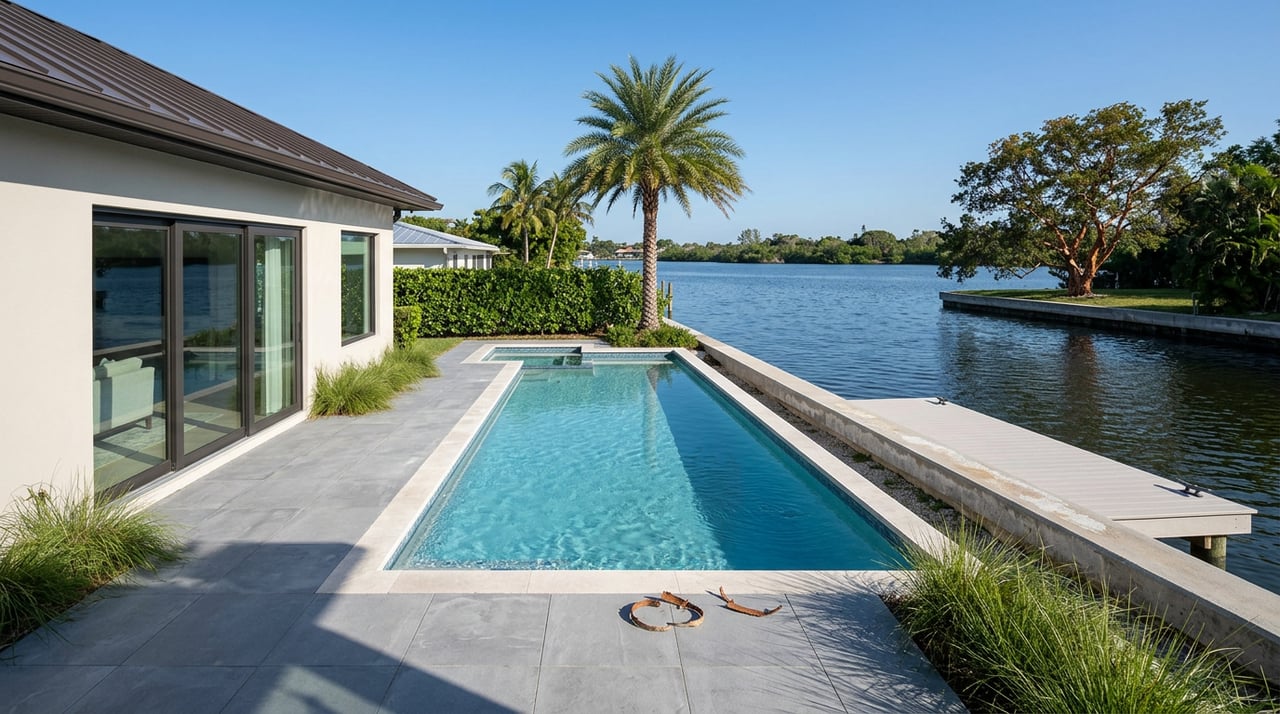
Luxury and waterfront sales often have fewer comparable sales, which affects appraisals and underwriting. Coastal features like docks, seawalls and property elevations also introduce insurance and documentation requirements that lenders review closely.
Core jumbo underwriting
Credit, down payment, reserves, DTI
- Credit score: Many lenders look for 700 to 740 plus for best pricing. Lower scores can be considered with stronger down payments and higher rates.
- Down payment and LTV: Expect at least 20 percent down. For very large loans, second homes or investment properties, some lenders look for 25 to 30 percent or more.
- Reserves: Jumbo loans often require significant post-closing reserves, commonly 6 to 12 months of principal, interest, taxes, insurance, and sometimes HOA fees. Higher LTVs or non-traditional income can push reserve needs higher.
- Debt-to-income: Lenders often prefer DTI under 43 to 50 percent. Strong compensating factors, like large liquid assets or low LTV, can help.
Income documentation options
- Traditional income: W-2s, two years of tax returns, and recent pay stubs are standard for salaried buyers.
- Asset-based options: Many luxury buyers qualify using assets.
- Asset depletion converts liquid assets into an imputed monthly income using a lender formula.
- Bank-statement programs use 12 to 24 months of business or personal statements to calculate income. Pricing is often higher and down payment and reserves may be larger.
- Retirement withdrawals and 1099s can qualify with proper documentation and seasoning.
Program details vary by lender. Private banks and portfolio lenders often have the most flexibility for high-net-worth clients.
Condo and coastal factors in Moorings and Park Shore
Condo project review basics
Lenders review the health and eligibility of a condominium project. They look at owner occupancy, single-entity ownership concentration, budget adequacy, reserves, insurance coverage, litigation and any special assessments.
Expect requests for HOA documents, including:
- Current year budget and most recent reserve study
- Master insurance policy summary
- Declaration, CC&Rs and recent meeting minutes
- Evidence of pending or approved assessments and any litigation
Many jumbo and portfolio lenders apply more flexible condo standards than agency products, but they still require a full review.
Building safety and assessments
Coastal Florida buildings receive additional attention. Lenders may request recent third-party structural or reserve studies, especially for older buildings. Review Collier County disclosures and HOA communications for recertification needs or special assessments that could affect eligibility and your monthly obligations.
Flood, wind and hazard insurance
Many Moorings and Park Shore addresses sit in FEMA flood zones. If a property is in a Special Flood Hazard Area, lenders require flood insurance, which impacts your monthly payment and reserves. For condos, lenders review what the master policy covers and whether unit owners need separate flood or windstorm coverage. Roof age, mitigation features and insurer deductibles can factor into underwriting.
Appraisal and valuation in luxury condos
Appraisers need suitable luxury and waterfront comparables. Fewer comps increase valuation uncertainty, so lenders may request additional comparables or a more detailed narrative appraisal. Waterfront features such as dock access, water depth, seawall condition and elevation are common adjustments.
Second home vs primary vs investment
- Primary residence: Your principal home.
- Second home: Occupied part of the year and not primarily rented. Many lenders apply stricter down payment and reserve requirements compared with a primary residence.
- Investment property: Primarily rented to tenants, which usually brings the most stringent underwriting and higher rates.
In Naples resort submarkets, the line between second home and investment can blur. Lenders will review HOA rental rules and local regulations. If short-term rentals are allowed and you intend to rent, some lenders may classify the home as an investment.
Rate vs points: how to decide
A discount point is prepaid interest equal to 1 percent of the loan amount. Paying points can reduce your interest rate for the life of the loan. The exact rate reduction per point varies by lender, often around 0.125 to 0.25 percent.
Here is an illustrative example for a 30-year fixed jumbo:
- Loan amount: 1,000,000 dollars
- One point cost: 10,000 dollars
- If one point lowers the rate by 0.25 percent, the monthly principal and interest could drop from about 5,368 dollars at 5.00 percent to about 5,215 dollars at 4.75 percent.
- Monthly savings: roughly 153 dollars
- Breakeven: 10,000 divided by 153 is about 65 months, or 5.4 years
If you plan to sell or refinance before the breakeven, buying points usually does not pencil. Ask your lender for a rate sheet that shows the actual price and savings at different point levels for your scenario. Some programs also offer temporary buydowns that reduce payments for the first one to two years, then revert.
Your preparation checklist
Gather these items early to help your lender and HOA move quickly:
- Government-issued photo ID and Social Security number or ITIN
- Last two years of personal tax returns and business returns if applicable
- W-2s for two years and 30 days of recent pay stubs if salaried
- Two to twelve months of personal and business bank statements
- Statements for investment and retirement accounts from the last 60 to 90 days
- Documentation for large deposits or transfers and source of funds
- 401(k) or pension statements and withdrawal rules if using retirement assets
- Signed purchase agreement and property address
- HOA and condo documents: budget, reserves, insurance summary, bylaws and recent minutes
- Homeowner and flood insurance quotes and an elevation certificate if in a flood zone
- Title information and any recent survey or plat if available
- Proof of other real estate owned and current mortgage statements
- Letters of explanation for credit blemishes, bankruptcies or large deposits
Planning tips for Moorings and Park Shore:
- Review the flood zone and insurance costs early, since they affect debt-to-income and reserves.
- Confirm HOA rental rules and any pending or approved assessments.
- Discuss comps with a local appraiser or ask for a pre-listing style valuation if you want clarity on price bands and appraisal risk.
- Prepare to document 6 to 12 months or more of reserves, especially for second homes or higher LTVs.
How private banking can help
Many Naples luxury buyers use private banking and portfolio lenders. These teams often provide:
- Portfolio lending: Flexible underwriting for unique properties, including interest-only or tailored amortization options.
- Asset-based qualification: Ability to qualify using investment accounts, securities or other assets.
- Bridge and construction options: Short-term funds to secure a property while arranging long-term financing or completing renovations.
- Coordinated service: Mortgage, cash management and investment teams that align your broader plan, sometimes with relationship pricing.
- Speed and discretion: Faster decisions for complex income profiles or special properties.
Programs and pricing vary by institution. If you maintain significant assets with a bank, ask about portfolio mortgage options and asset-based underwriting.
Next steps with a local advisor
Strong preparation is the fastest way to a smooth closing. Clarify your occupancy plan, gather documents, and engage a lender familiar with coastal condos and flood insurance. As you evaluate properties across Moorings and Park Shore, align your financing with the building’s HOA profile and insurance posture so there are no surprises.
If you are weighing multiple paths, a private conversation can help you map the options. For discreet guidance on the Moorings and Park Shore market, schedule a private consultation with Karen Van Arsdale.
FAQs
How much down for a Naples waterfront jumbo loan
- Many lenders expect 20 to 30 percent down, with higher requirements possible for second homes or lower credit scores.
Can I use investments to qualify for a Moorings purchase
- Yes, lenders may use asset depletion, documented retirement distributions or bank-statement programs, each with specific rules and seasoning.
Will a Park Shore condo qualify for conventional financing
- It depends on the HOA’s financials, insurance, owner occupancy, litigation and any special assessments, which a lender will review in a project approval.
Are jumbo mortgage rates higher in Naples right now
- Jumbo pricing can be competitive and depends on lender appetite, loan size, LTV, credit profile and overall market conditions.
Should I pay points on a Naples jumbo loan
- Run a breakeven analysis by dividing the cost of points by the monthly savings and compare the result to how long you expect to keep the loan.