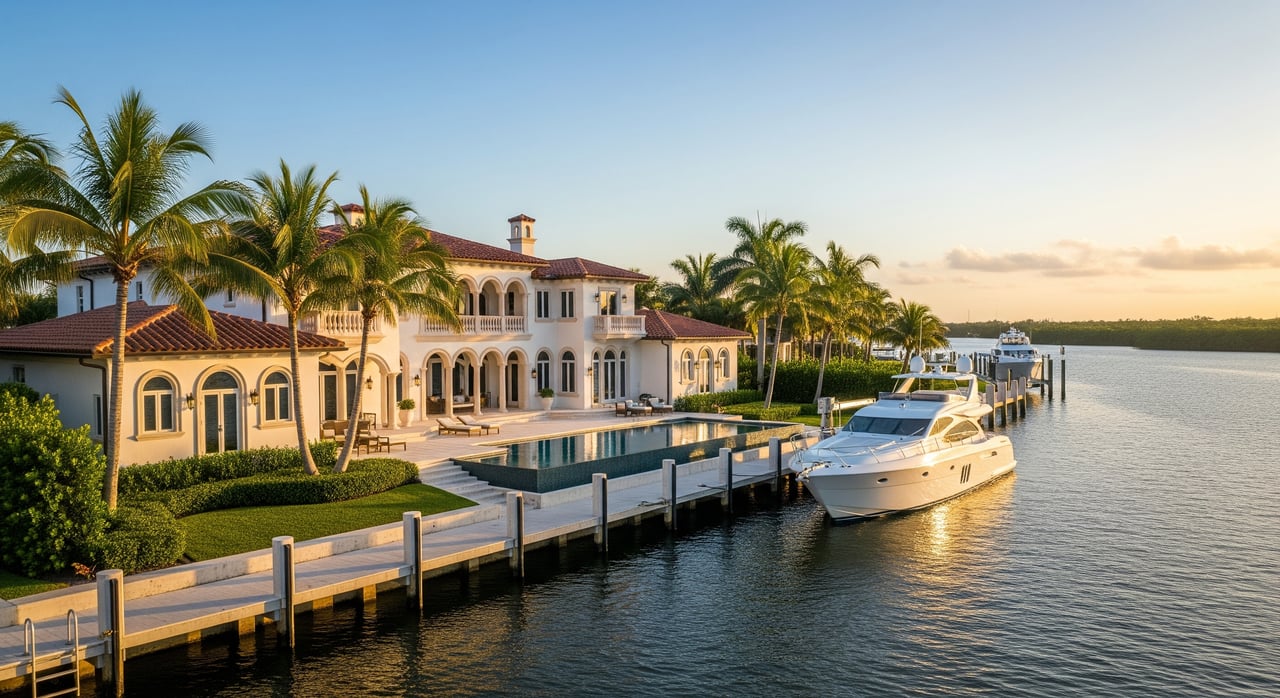
If you are considering a home in Port Royal, the purchase price is only part of the story. In this stretch of coastal Naples, ownership costs often include more than taxes and insurance, and those extra layers can meaningfully affect your annual budget and your long-term plans for the property. Understanding club eligibility, association dues, waterfront review fees, and tax-bill line items before you close can help you move forward with far more clarity. Let’s dive in.
Why Port Royal costs are layered
In Port Royal, ownership expenses are not usually a single line item. Buyers may need to account for property taxes, flood insurance, Port Royal Club membership costs, Port Royal Property Owners' Association dues, project review fees, and possible special assessments that still appear on the tax bill.
That matters because two homes with similar asking prices can carry very different ongoing costs. If you are buying from out of market or planning a second home, it is especially important to understand how each piece fits together before you make a final decision.
Where Port Royal begins and ends
The Port Royal Association describes the neighborhood as extending from 21st Avenue South to Gordon Pass, between the Gulf of Mexico and Naples Bay. That geographic definition matters because club eligibility, association status, and review requirements can depend on the specific parcel.
In other words, you do not want to assume every address is treated the same way. A careful address-level review is one of the most important steps in your due diligence.
Port Royal Club membership basics
For many buyers, Port Royal Club access is one of the biggest lifestyle and budget questions. The club is organized as a members-only beach club, and eligibility is tied to ownership of qualifying Port Royal property.
According to the club’s public membership information, an eligible owner has 90 days after purchase to make a membership decision. During that period, you generally have three paths to consider.
Three membership paths after closing
You may be able to:
- Join the club
- Preserve resident eligibility by placing a deposit equal to 25% of the current joining payment and paying 25% of annual dues for up to five years
- Decline both options and later face a reinstatement fee equal to 75% of the current joining payment
This is one of the most important financial deadlines to understand before you close. If the property is club-eligible, you should confirm whether the seller has already made a membership election or taken steps to retain eligibility.
Current club cost figures
The club’s public page explains the membership formulas, but it does not publish a dollar schedule. Recruiting materials currently in circulation list a non-refundable joining payment of $315,000 and anticipated annual dues of $20,000 per year.
Because published materials can change, those figures should be verified during the transaction. Even so, they give you a useful framework for understanding the scale of club-related ownership costs in Port Royal.
What membership includes
The club states that members enjoy access to the private beach, dining areas, spa, fitness, and tennis facilities. For some buyers, that access is central to the ownership experience. For others, it may be less important than boating access, property design, or privacy.
That is why the right question is not simply, “Is there a club?” The better question is whether the property’s club status and timeline align with how you actually plan to use the home.
Clubhouse reconstruction and timing
Another practical detail is the current state of the club facilities. City planning documents indicate the clubhouse is being reconstructed after Hurricane Ian, with estimated completion in summer 2026.
A temporary-use filing also states that evening dining is being reintroduced through temporary facilities at 2755 Gordon Drive until June 1, 2027, or until the rebuilt club opens, whichever comes first. If club access is a major part of your decision, it is wise to understand both the current temporary arrangements and the expected timeline for the permanent facility.
Association dues and property classification
Beyond the club, Port Royal owners should also review Port Royal Property Owners' Association dues. The association’s current dues page lists $835 for member properties and $735 for associate properties.
There is an important wrinkle, though. A separate associate-properties page still lists $525 for certain addresses outside the R1-15A zoning district, which means the exact parcel classification and current status should be confirmed for the property you are considering.
Why classification matters
A home may look like it belongs to the same ownership structure as neighboring properties, yet its association status can differ. That difference can affect annual dues and may also shape how certain approvals or project costs are handled.
For that reason, one of the smartest questions a buyer can ask is simple: Is this property a member property, an associate property, or subject to another status that changes dues or privileges?
Construction approvals can add cost
If you are planning to renovate, rebuild, or update exterior features, Port Royal association approvals are a major part of the ownership picture. The association states that any plans requiring City of Naples permitting must be reviewed and approved by the association before the city issues a permit.
The association also states that membership must be maintained throughout construction. That is particularly relevant for buyers purchasing older homes with the intention to improve or replace them.
Prepaid dues for new construction
The association’s fee sheet, effective January 2024, says new construction projects must prepay three years of association member dues at $795 per year. Because this figure differs from the current dues page, it should be rechecked before any project begins.
This kind of detail is easy to miss during a fast-moving purchase. Yet on a high-value waterfront property, even small process requirements can affect your planning, timing, and cash needs.
Dock and shoreline review fees
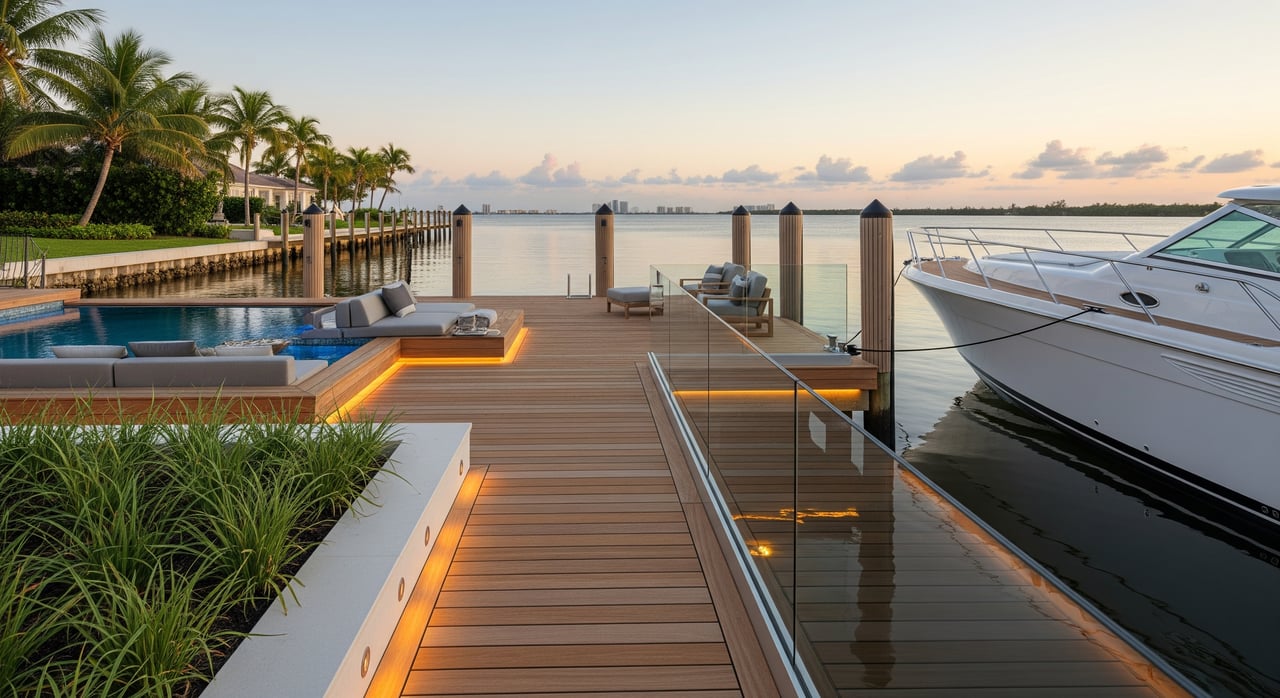
For waterfront owners, dock and shoreline work can create another layer of expense. The association’s Dock and Shoreline Committee reviews plans before city submission.
Posted review fees include:
- $0.60 per square foot for a new dock, with a $200 minimum
- $200 for a new boat lift
- $0.40 per square foot to repair an existing dock
- $200 flat fee for multiple revisions
- $400 surcharge for any non-member project
The association’s review materials also note that hardscape, landscape, pool, generator, column, gate, perimeter wall, and fence work may trigger review fees and approvals. If you are buying for boating or planning exterior upgrades, these costs should be part of your early budgeting.
Property taxes in Collier County
Property taxes are another key part of the Port Royal cost stack. In Collier County, the property appraiser determines value for tax purposes, local taxing authorities set millage rates, and those rates are applied to taxable value to calculate the tax bill.
That means your future taxes may differ from the seller’s current bill. A recent purchase price, changes in assessed value, and the buyer’s exemption status can all influence what you actually pay.
Homestead rules to understand
Collier County states that to qualify for homestead exemption, you must hold title on January 1 and make the property your permanent residence. New applications must be filed in person by March 1.
For qualifying homesteads, Save Our Homes limits assessed-value growth to 3% or the CPI, whichever is less. However, that cap does not apply to new construction in the first year it is added to the tax roll, and it does not apply to the school-board portion.
For many Port Royal buyers, especially seasonal or second-home owners, homestead savings may not apply because the property may not be their permanent residence. That is not always the case, but it is a common issue worth reviewing early.
Flood insurance and coastal risk
In a waterfront neighborhood like Port Royal, flood insurance deserves close attention. FEMA states that most homeowner policies do not cover flood damage, so flood insurance is typically a separate policy.
FEMA also notes that homes in high-risk flood areas with government-backed mortgages are required to have flood insurance. Coastal properties may also face storm surge, wave action, and erosion risk, which makes parcel-specific insurance review especially important.
What to check before closing
Before you close, it is wise to review:
- The property’s flood zone
- Elevation details
- Existing insurance requirements
- Seawall and dock conditions
- Any parcel-specific underwriting issues tied to coastal exposure
These factors can materially change annual ownership costs. They can also influence future renovation decisions and lender requirements.
Special assessments on the tax bill
One more item buyers should not overlook is the possibility of special assessments. The City of Naples defines special assessments as bills for neighborhood infrastructure improvements that are paid through the property tax rolls.
The city’s Port Royal Area Dredging page states that the project is complete and assessments are still being paid. Because of that, you should ask whether a specific parcel still carries any assessment balance or other line item on the tax bill.
Questions to ask before you buy
When you evaluate a Port Royal property, it helps to approach ownership costs as a checklist rather than a guess. A few focused questions can reveal a great deal.
Consider asking:
- Is the property fully eligible for Port Royal Club membership?
- Has the seller already joined, preserved eligibility, or declined it?
- What are the current club joining payment and annual dues?
- Is the parcel classified as a member property or an associate property?
- Are there active association dues, review fees, or prepaid construction requirements?
- Are there existing or potential dock and shoreline costs?
- What flood insurance requirements apply to this address?
- Does the current tax bill include any special assessments?
In Port Royal, these are not minor details. They are part of the real cost of ownership and can meaningfully shape your buying strategy.
Why careful due diligence matters
Port Royal remains one of Naples’ most distinctive waterfront addresses, but it is best understood as a layered ownership environment. Club eligibility, association classification, waterfront maintenance, storm-risk protection, and tax-bill items can all shift the true annual cost of carrying a property.
When you understand those details before closing, you can make decisions with confidence and avoid surprises later. If you are considering a purchase in Port Royal and want discreet, neighborhood-specific guidance, Karen Van Arsdale can help you evaluate the full ownership picture with the care this market deserves.
FAQs
What are the main ownership costs in Port Royal?
- In addition to property taxes, buyers may need to budget for flood insurance, Port Royal Club costs, Port Royal Property Owners' Association dues, review fees for exterior or waterfront work, and possible special assessments on the tax bill.
How does Port Royal Club membership work for a buyer?
- The club states that an eligible owner has 90 days after purchase to join, preserve eligibility by making a partial deposit and paying a portion of annual dues for up to five years, or decline and later face a reinstatement fee based on the current joining payment.
What is the current Port Royal Club joining payment?
- Public recruiting materials currently in circulation list a non-refundable joining payment of $315,000 and anticipated annual dues of $20,000 per year, but buyers should verify current figures during the transaction.
Do all Port Royal properties have the same association dues?
- No. The association lists different dues for member and associate properties, and some associate-property information reflects a separate payment amount for certain addresses, so parcel-specific status should be confirmed.
What approvals are required for Port Royal construction projects?
- The association states that plans requiring City of Naples permitting must be reviewed and approved by the association before the city issues a permit, and association membership must remain in place during construction.
What dock fees can apply to a Port Royal waterfront property?
- The association posts review fees for new docks, boat lifts, dock repairs, revisions, and non-member projects, so buyers planning waterfront work should budget for those charges in addition to construction costs.
How do property taxes work for Port Royal homes in Collier County?
- Collier County says the property appraiser determines value, local authorities set millage rates, and taxes are calculated by applying those rates to taxable value, which means a buyer’s future bill may differ from the seller’s current taxes.
Do seasonal Port Royal buyers usually get homestead savings?
- Homestead exemption requires the property to be your permanent residence as of January 1, so many seasonal or second-home buyers may not qualify, depending on their circumstances.
Is flood insurance important for Port Royal homes?
- Yes. FEMA states that flood damage is usually not covered by standard homeowner policies, and homes in high-risk flood areas with government-backed mortgages must carry flood insurance.
Can a Port Royal property still have a special assessment?
- Yes. The City of Naples says special assessments are paid through the property tax rolls, and the Port Royal Area Dredging project is complete but assessments are still being paid, so parcel-level confirmation is important.