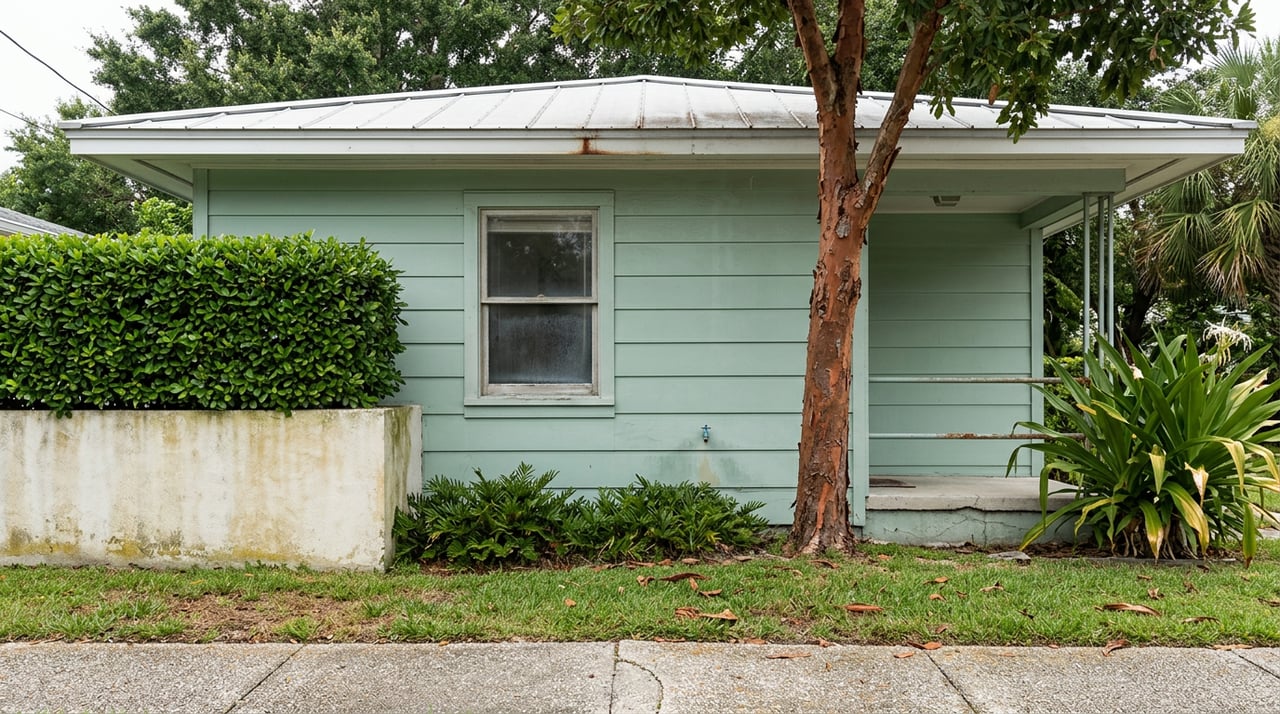
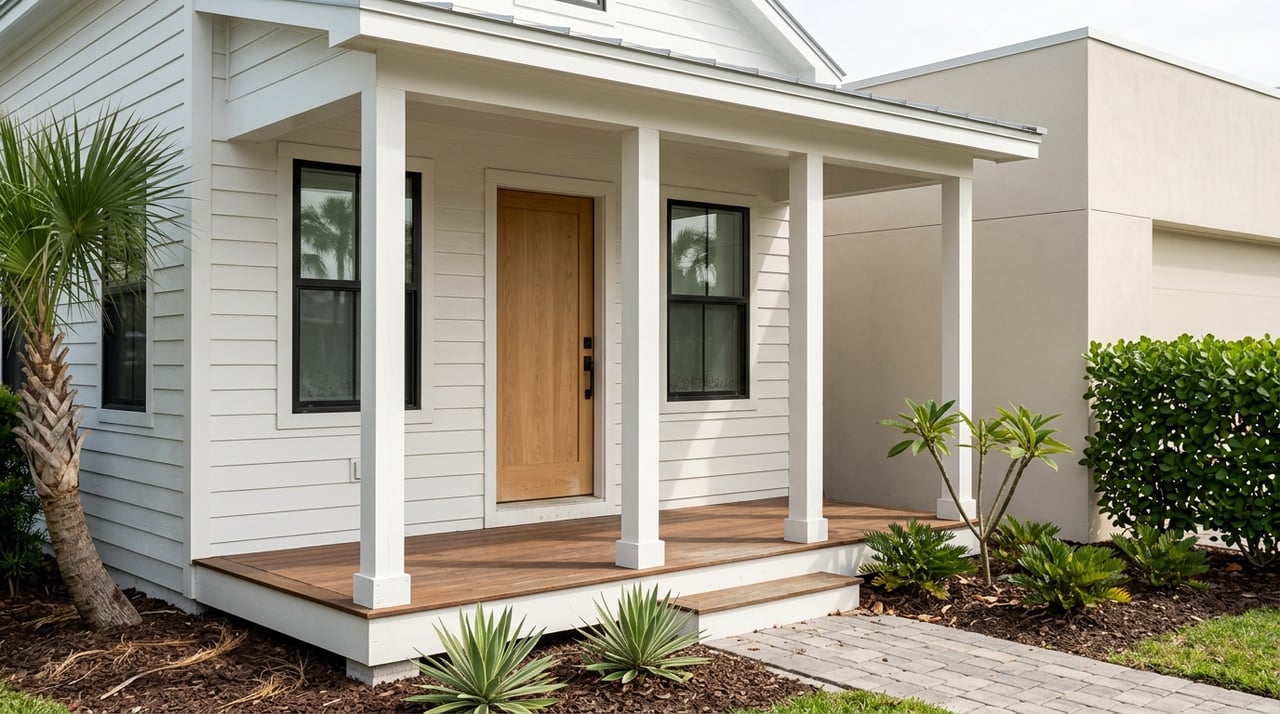
Say you're underwriting a 1950s cottage a few blocks off Third Street South this summer. The listing photos show terrazzo floors and a kitchen that hasn't moved since the Eisenhower administration. Your contractor's already sketched a $400,000 renovation. Then a friend forwards you a headline about Florida's new permit-free renovation law, the one that takes the paperwork out of home improvement starting this year. You start doing the mental math on savings.
Don't. The rule that actually decides how far your renovation can go, and what it will cost, is a different one entirely, and the new state law doesn't touch it.
The Permit-Free Law Has an Address Problem
Florida's HB 803 became law this spring and took effect July 1, 2026. The headline provision is straightforward: local governments must exempt single-family homeowners, or their contractors, from needing a permit for work valued under $7,500, as long as it skips electrical, plumbing, structural, mechanical, and gas trades. Cosmetic work. Paint, trim, cabinetry, flooring.
Here's the part that matters if you own or are buying in Old Naples: the exemption does not apply to any property located in a flood hazard area, and the City of Naples has stated that more than 90 percent of addresses within city limits sit inside a Special Flood Hazard Area.
So the state legislature built a modest relief valve for Florida homeowners. Even setting the flood-zone exclusion aside, most renovation work that actually moves a listing, a new kitchen, an addition, a rewire, blows past both the $7,500 ceiling and the five excluded trades in the first line item. The law is real. It's just not the rule governing your project.
The Rule That Actually Sets Your Ceiling
The rule that matters is the City of Naples 50 percent Substantial Improvement and Substantial Damage standard, and it's been on the books since a 2011 ordinance update. The definition, pulled from the city's own flood damage prevention code, is worth sitting with:
Substantial improvement means any reconstruction, rehabilitation, addition, or other improvement to a structure where the cost equals or exceeds 50 percent of the market value of the structure before the work begins.
Cross that line, and the entire structure has to come up to current Florida Building Code flood standards. In practice that means elevation. If your lot sits in an AE7 zone, the Base Flood Elevation is 7 feet, and the City of Naples requires the finished floor to sit at least one foot above that, so 8 feet minimum. An AE9 lot pushes the floor to 10 feet. A cottage built at grade in the 1950s or 60s is nowhere close.
The valuation math matters too. The city calculates the 50 percent threshold against the structure's value alone, not the land, typically starting from the Collier County Property Appraiser's assessed figure with an adjustment, though an owner can commission an independent appraisal instead. On an older cottage, the structure value is often modest next to the land beneath it, which means the 50 percent line arrives faster than most buyers expect. A kitchen, a primary suite addition, and a new roof in the same permit cycle can trip it well before anyone planned to touch the foundation.
Why So Many Cottages Skip the Remodel Entirely
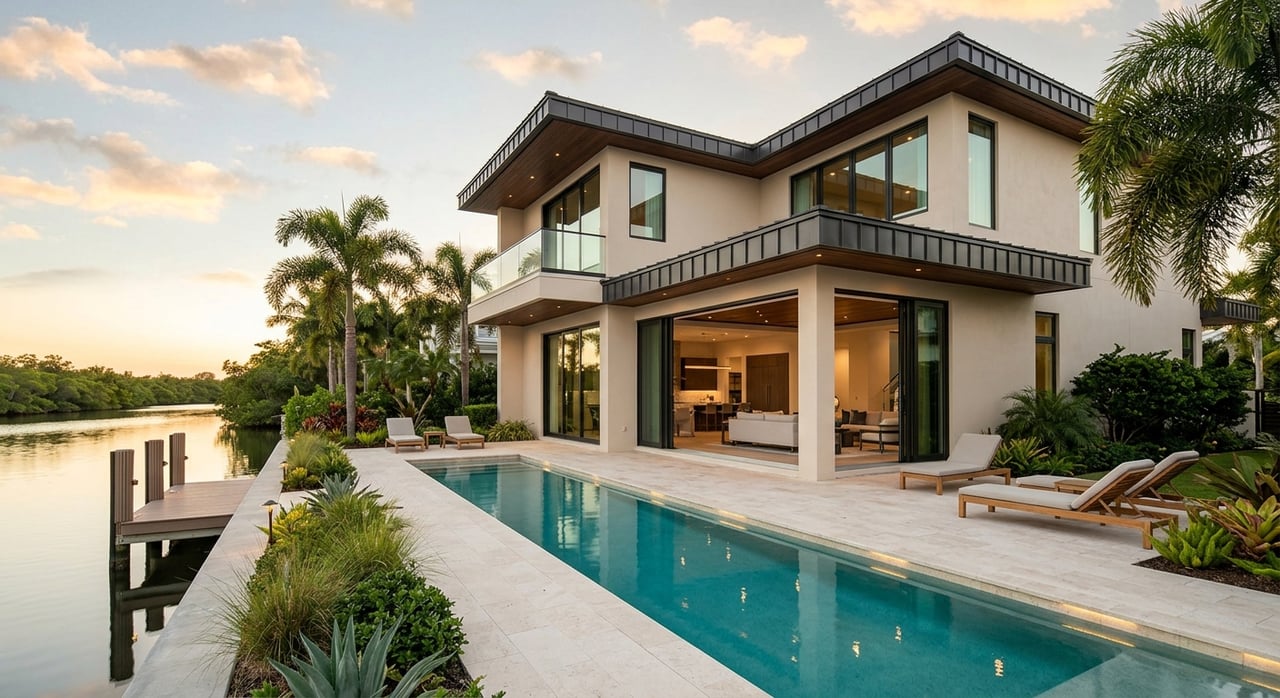
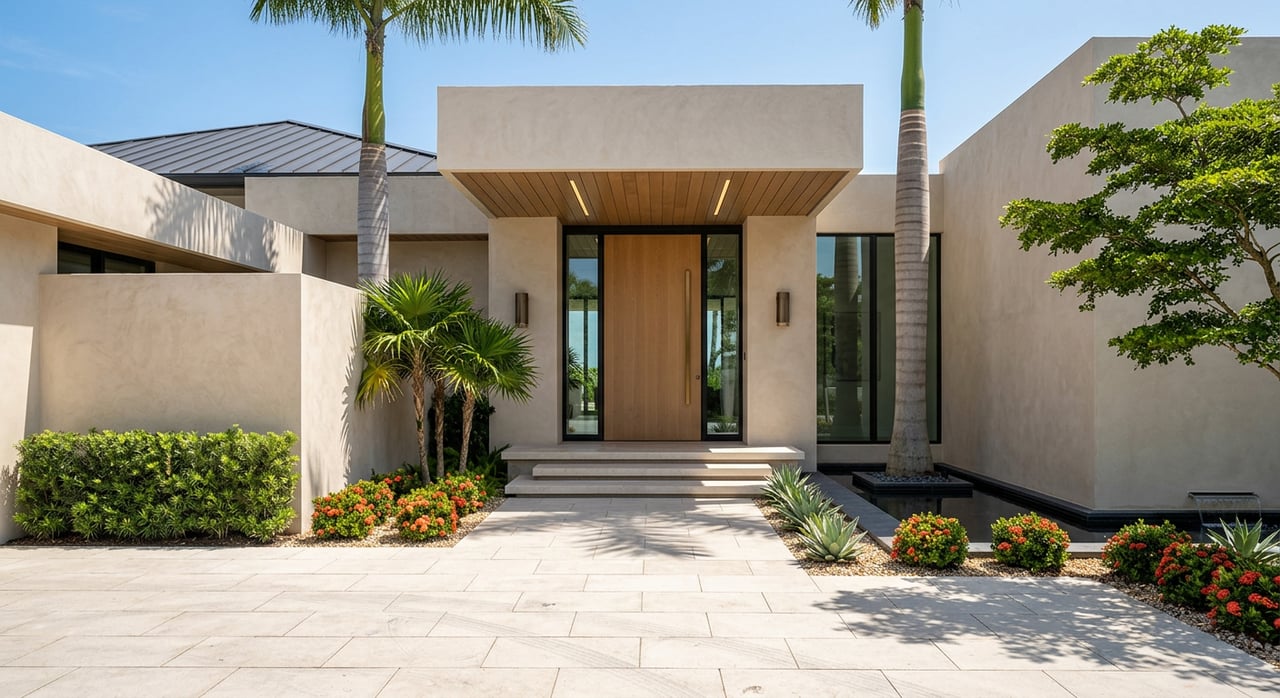
This is the mechanism behind something you can see just by walking the neighborhood. Local builders working across Old Naples describe most current projects there as teardown-rebuilds, replacing 1950s and 60s-era cottages on 75 to 100 foot lots with modern 3,000 to 5,000 square foot homes built to current code.
That pattern isn't primarily about taste. It's what the 50 percent rule does to the economics. Once a serious renovation is going to trigger full flood compliance anyway, the incremental cost of finishing the job as a full rebuild, on pilings, at correct elevation, from the ground up, often looks better than a phased renovation that hits the same wall halfway through and still ends in elevation work, just with more of the original structure in the way. A partial remodel that trips the threshold gets you the obligation without the clean outcome.
It also explains a detail that shows up on listings priced above $2 million with increasing frequency: an elevation certificate attached to the disclosure package. Two homes in the same flood zone, built at different heights, carry meaningfully different insurance costs and different renovation runway before they hit the 50 percent wall. An elevation certificate tells you which one you're buying before you've committed to a scope.
The 66 Addresses Playing by a Different Rule
There's one real exception, and it's narrower than most buyers assume. The Naples Historic District was established in 1987. It's bounded by 9th Avenue South to the north, 3rd Street South to the east, 13th Street South to the south, and the Gulf to the west, and it contains 66 recognized historic buildings, Palm Cottage among them, the 1895 tabby-mortar house on 12th Avenue South that now serves as the Naples Historical Society's headquarters.
A structure recognized as historic, either inside that district or individually eligible through the State Historic Preservation Office if it sits outside it, can apply for exemption from both the floodplain elevation requirement and the FBC substantial improvement trigger. The process runs through the Naples Historical Society, which verifies historic status, and the City Building Official, who reviews the permit application alongside a Naples Historic Building Exemption form. If the work involves exterior renovation, doors, windows, roofing, siding, SHPO review adds up to 30 days. Interior-only work skips that step. Approved historic structures get access to fast-track permitting once the paperwork clears.
The tradeoff is real, not cosmetic. The City of Naples' historic-building guidance says alterations have to preserve the historic character. Deteriorated original features get repaired, not replaced, unless replacement is unavoidable. This is a genuine path around the flood-elevation ceiling, not a blank check to modernize however you like.
Before you write an offer on an older cottage in Old Naples, get answers to these before the inspection period, not after:
- Is the structure listed within the Naples Historic District, or individually eligible through SHPO if it sits outside the boundary?
- What flood zone and Base Flood Elevation applies to the parcel, and does the seller have a current elevation certificate?
- What is the structure's assessed value, separate from land, and what does that put your 50 percent renovation ceiling at in dollars?
- Does your intended scope, priced honestly, land under or over that ceiling?
What This Changes About How You Shop
None of this makes an Old Naples cottage a bad buy. It changes what question you should be asking before you make an offer. The question is whether the specific address you're looking at carries historic status that changes the math, or whether you're pricing a rebuild from day one and simply calling it a renovation on the listing sheet.
Buyers who get that distinction right before closing negotiate differently than buyers who discover it during permitting.
A Short FAQ
Does HB 803 help at all with an Old Naples project? For non-structural cosmetic work under $7,500 on a parcel outside a flood hazard area, yes. Most real renovation budgets exceed both the trade exclusions and the dollar threshold regardless.
Can I get a non-historic cottage designated historic just to unlock the exemption? Designation runs through an eligibility review by the Naples Historical Society and, for buildings outside the existing district, the State Historic Preservation Office. It's based on the building's actual historic and architectural merit, not on a renovation timeline, so it isn't a shortcut you can request on demand.
Does the 50 percent threshold reset every year? Ask the Building Department how it applies the threshold to phased work before assuming separate projects will be treated independently.
If you're weighing a cottage renovation against a rebuild, or trying to read what an elevation certificate actually means for a specific Old Naples address, that's a conversation worth having before you write an offer, not after. Karen Van Arsdale has spent decades inside these blocks and can walk you through what a particular property's flood zone, structure value, and historic status actually mean for your plans. Schedule a private consultation to talk through the address you have in mind.
This article is general information, not legal, tax or financial advice. Consult a qualified professional about your situation.